
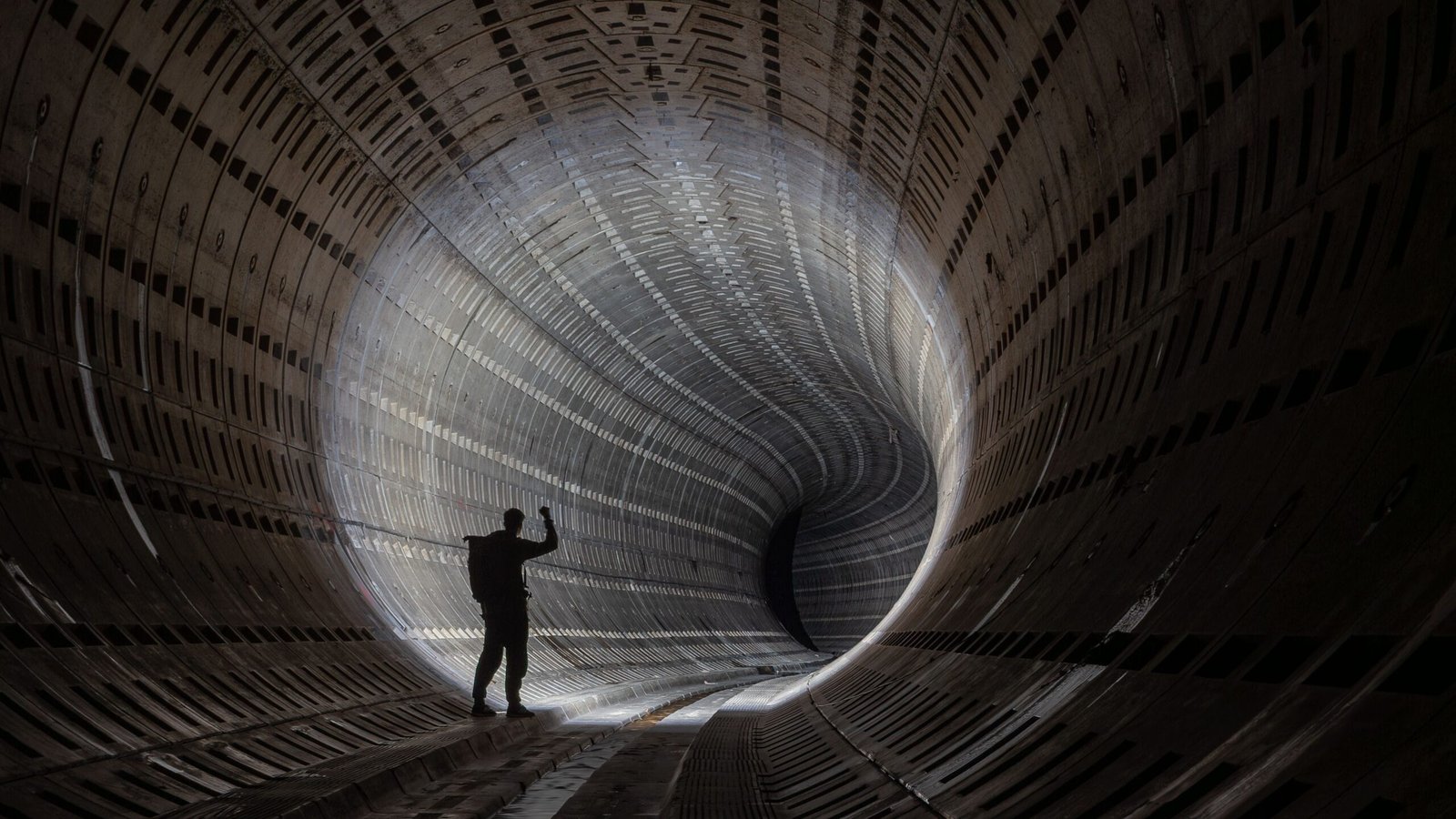
Quick Answer: What the Matrix really is, in the sense that matters, is a structured environment with rules, limits and a built-in forgetting. Not a movie, and not only governments or money. A designed experience you entered without your memories, in which almost everything around you encourages you to believe you are the character on the screen rather than the one holding the controller.
How do you get out? You do not fight it. You learn how it works, take back your attention, question every belief you did not choose, and remember what you are. The cage was never physical. It was made of assumptions.
Something in you already suspects this, or you would not have read past the title.
Not a theory you were taught. A feeling. That quiet sense that the whole arrangement is slightly too neat, the options slightly too narrow, the script slightly too familiar. Most people meet it, dismiss it, and get busy. If it keeps returning, that is what this is for.
What the Matrix Really Is
Think of a game engine. Rules, physics, boundaries, levels, and a set of limits on what the character can perceive.
That is closer to the truth of this place than the idea of a straightforward physical world that simply happens to exist. It is structured. It is consistent. It has laws that hold whether or not you understand them. And like any well-built game, it does not announce that it is one.
The external layer is the obvious part. Systems that reward obedience and quietly punish curiosity. An education that teaches you to operate inside the structure but never mentions the structure. An economy that needs you slightly dissatisfied. Media that runs on attention, and knows fear holds attention better than anything else.
None of that requires a conspiracy. It requires only incentives and time.
But the external layer is not the part that holds you. It never was.
The Lie Underneath Everything Else
The most effective thing ever installed in a human being is the belief that they are their body.
Once that is in place, everything else follows without any further effort. If you are a body, then death is annihilation, and fear becomes the operating system. If you are a body, then your worth is visible, comparable, and declining. If you are a body, then you are small, and small things do as they are told.
The alternative is not a comfort. It is a claim: that you are consciousness having a temporary human experience, wearing a biological avatar the way a player wears a character.
Millions of people across every culture and century have reported experiences that convinced them of this. It is worth being straight about what that is and is not. It is not proof. Science can measure the brain’s activity and cannot currently settle what consciousness is or whether it depends on the body. Anyone telling you the matter is scientifically closed, in either direction, is overstating.
What can be said honestly is that it is a conviction, sincerely held by an enormous number of people, and that living as though it were true changes almost everything about how a person behaves.
Why the Forgetting Is the Mechanism
You did not arrive here knowing who you are. That is not an accident of biology; it is the condition of the game.
And what happens next is that the forgetting gets reinforced. A child arrives with imagination, curiosity, and no sense of limits, and is placed inside a structure that rewards none of the three. Be realistic. Know your limits. That is just how life is. People like us do not do things like that.
Those are not observations about the world. They are instructions, and they are installed early, before you have any capacity to evaluate them.
By the time you are old enough to think about it, you are not running your own program. You are running one assembled from other people’s fears, delivered in your own voice, and it feels exactly like being yourself.
Related: The Law of One, Remember Who You Are
The Matrix Is Also Internal
Here is where this stops being about them and starts being about you.
The most secure prison is the one you maintain yourself, and beliefs are how it is built. A belief is not a passive thought. It is an instruction about what is possible, and reality is obedient rather than cruel. It does not judge you. It reflects you.
Believe you are powerless and you will act powerless, and the results will confirm it. Believe you are limited and you will avoid every test that might disprove it, so the limit will never be challenged. Believe you cannot, and by simple mechanics, you will not.
This is the same principle behind the line this whole site rests on. You do not manifest what you want. You manifest who you are. Reality reflects state, not effort, which is why two people can work equally hard and only one arrives anywhere.
The Tiredness That Is Not About Sleep
There is an exhaustion that rest does not touch.
Sometimes what it is telling you is that you have outgrown the shape of your life and have not yet found the next one. Holding up a life that no longer fits takes constant energy, and that genuinely feels like being tired in your bones.
And sometimes it is depression, which is a medical condition with real treatment and a real recovery rate, and which does not lift because you read something that moved you. From the inside, the two can look almost identical, and nobody, including me, can tell you from a page which one you have.
So if the flatness has lasted more than a couple of weeks, or comes with changes to your sleep, your appetite or your interest in things you used to love, speak to a doctor before you speak to anyone about frequency. Healing and awakening are not competitors. Most people who get treated find the inner work goes better afterwards.
Attention Is How You Consent
The system does not run on your obedience. It runs on your attention.

Where your attention goes, your energy follows, and where your energy goes, your life follows. That is not mystical; it is mechanical. What you attend to is what you notice, what you notice is what you think about, what you think about is what you feel, and what you feel is what you do. Run it for twenty years, and it is a life.
Which means the most consequential thing you decide each day is not what you achieve. It is what you agree to look at.
An hour of outrage costs you the hour, the state you carry into the next conversation, and the version of the world you operate inside until you sleep. Withdrawing from that is not ignorance. You can stay properly informed in twenty minutes. What is being offered instead is not information; it is a drip engineered to keep you slightly agitated, because agitation is where your energy leaks.
Stop feeding it, and something strange happens. The urgency turns out to have been manufactured, and it was never yours.
Related: Are You Trapped in Yesterday’s Reality?
You Do Not Escape by Fighting
Every game has rules, mechanics, and things the designers did not advertise. This one is no different.
And the people who get anywhere in it are not the ones raging at the screen. Loud rebellion is still a reaction, and a reaction is still the system holding your controller. The ones who move differently are quiet about it. They watch the patterns. They stop reacting. They start choosing.
The moment you stop playing emotionally, most of the leverage over you disappears. Not because you have become cold, but because you have stopped handing your state to whoever wants it.
Attachment is the same mechanism in another form. Whatever you cannot bear to lose has authority over you, and the more you own, the more of you belongs to it. That is not an argument for poverty. It is an argument for holding things lightly, so that what happens to them does not decide who you are.
Nothing Binds a Sovereign Being
Here is the sentence worth carrying out of this whole piece.
Nothing can hold you that you have not agreed to. Not a system, not a story, not a limit somebody handed you when you were seven.
Free will is real, and it is conditional in one specific way: it activates when you claim it. A person who believes they have no choice genuinely does not have one, because they will never look for the door. The structure does not need to remove your will. It only needs you to keep denying you have it.
Which answers a question nobody in the system wants asked. If everyone remembered they were sovereign, who exactly would rule them?
What the Practice Actually Is
None of this happens by reading. It happens by sitting down.
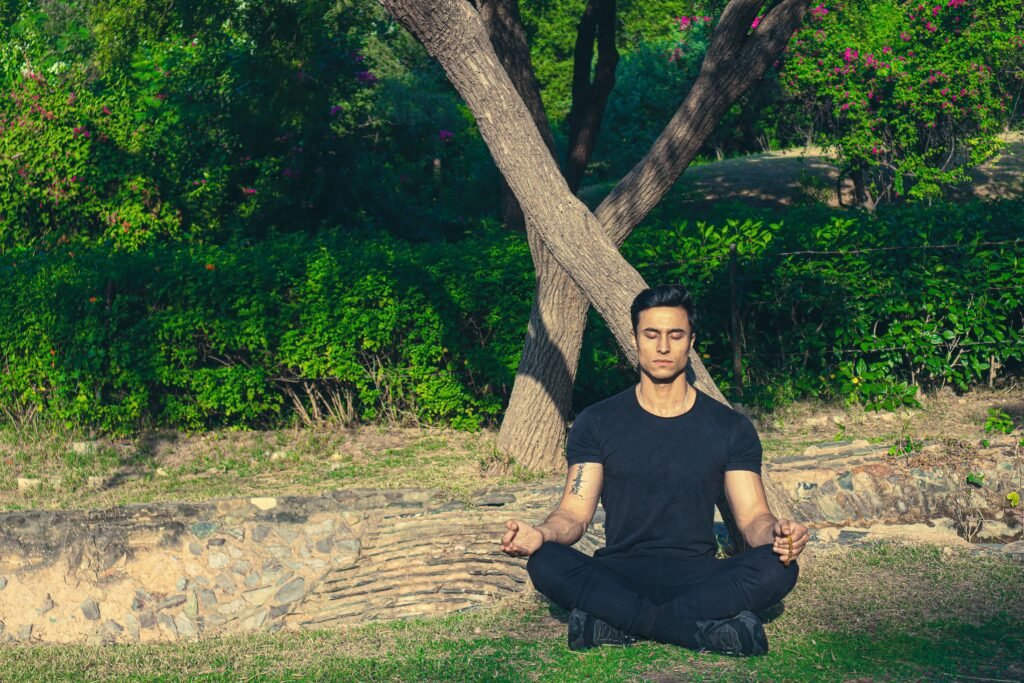
Meditation is the laboratory. Not emptying your mind, not achieving calm, and you have not failed when peace does not arrive. You sit, thoughts appear, and you watch them appear. What that builds, over weeks, is the single most useful skill available: noticing a thought without becoming it. Most of the day you are not having thoughts; you are being had by them.
Ten minutes daily beats an hour on Sundays. Sit rather than lie down, put attention on the breath because it is always there and dull enough that you notice when you have wandered, and when you find you have gone, return. The returning is the exercise. There is good research showing this kind of practice helps with stress, anxiety, and low mood, which matters because it means the benefit does not depend on anyone’s cosmology being right.
Question every belief. Take one sentence you say about yourself, and ask where it came from. Can you name the person or the moment? Was it ever tested, or did you avoid every situation that might have disproved it. Who benefits if you keep behaving as though it is true? Most collapse at the first question, and you find you have organised twenty years around a remark somebody has long forgotten making.
Regulate the reaction. Nothing drains energy faster than an unconscious response. The gap between what happens and what you do is where your entire sovereignty lives, and meditation widens it.
Replace belief with identity. Do not affirm what you want; embody who you are. I want to be disciplined keeps discipline outside you. I am someone who keeps promises to himself changes what you do at six in the morning. Effort argues with the old identity. Identity makes the effort unnecessary.
And be consistent rather than dramatic. Nobody wakes up in a weekend.
Related: The Silent Man and the Power of Self-Mastery
When It Gets Hard
At some point the questioning stops being interesting and becomes uncomfortable, because you reach a belief that other people in your life rely on you keeping.
That is where most of it stalls, and it is where someone standing outside your structure changes things. Not to tell you what to believe. To ask the question you have been walking carefully around for years.
That is what the coaching is for. Clarity for your path, depth for your growth, and a second pair of eyes on the sentences you cannot read from inside. If something is already moving in you, that is usually the signal to begin rather than to wait until it makes more sense.
The Bottom Line
You are not the character. You are the one experiencing the character.
The structure holding you is not made of walls. It is made of assumptions, most of them inherited, none of them chosen, quietly deciding what you attempt. Which means there is nothing to escape from and everything to see through.
Take back your attention. Question everything you were handed. Sit still often enough to hear which voice is actually yours. And stop asking what you are allowed to do, which is a question for a character, and start asking what you choose to experience, which is a question for a player.
You are not broken, and you are not late. You came here to forget, and then to remember. That is the whole game.
Frequently Asked Questions
What the matrix really is, in simple terms?
A structured environment with rules, limits and a built-in forgetting, reinforced by systems that reward compliance and by beliefs installed before you could evaluate them. The external layer is real, but the part that holds you is internal.
How do you escape the matrix?
Not by fighting it. By withdrawing attention from what drains you, questioning every belief you did not choose, practising enough stillness to notice thought as thought, and living from identity rather than effort.
Are we living in a simulation?
Nobody knows, and the question matters less than it seems. Whether or not the substrate is literal, the practical structure is the same: rules, limits, and inherited beliefs shaping what you attempt. The work is identical either way.
Am I really not my body?
That is a conviction rather than a proven fact, held sincerely by a great many people across every culture. Science can measure brain activity and cannot presently settle what consciousness is. What can be said is that living as though it were true changes how a person behaves.
Is the tiredness I feel spiritual or is it depression?
It can be either, and they look similar from the inside. If flatness has lasted more than a couple of weeks, or comes with changes to sleep, appetite, or interest in what you used to enjoy, see a doctor first. Spiritual work and medical treatment are not alternatives.
How long should I meditate?
Ten minutes daily does more than an hour once a week. The aim is not a peaceful mind, but the ability to notice a thought without becoming it, and that comes from consistency rather than duration.
Related Topic: Are You Living in a Computer Simulation? Nick Bostrom’s original 2003 paper
Related Topic: Do We Live in a Simulation? Chances Are about 50–50
Related Topic: Depression in adults, symptoms and when to get help